Opinion: The Fragile Core of Global Commerce
By Rahul Karunakar, Editor-in-Chief
· 6 min read
AI Summary
Ten products, led by electronics, make up 35% of trade-vulnerable imports. AI-driven concentration and geopolitical shocks test supply chain resilience, risking future disruption.
Research by the McKinsey Global Institute reveals that a mere ten products constitute 35 percent of global goods imports that are susceptible to various trade vulnerabilities, with electronics alone accounting for 41 percent of the exposed value. Crude oil, smartphones, memory chips, and laptops are highlighted as critical vulnerabilities in international trade, a concentration that poses significant challenges for supply chain resilience as geopolitical disruptions challenge the robustness of global logistics.
The findings from McKinsey, which analysed 6,000 products accounting for $19 trillion in imports, indicate that 23 percent of traded goods are exposed to at least two sources of vulnerability - such as criticality to economic activity, geographic concentration, or sourcing from potentially hostile nations - an increase from 15 percent in 2000.
Only 4 percent encounter all three risks.
The research highlights a contradiction in contemporary commerce: the system has shown an impressive ability to adjust, yet this adaptability is built upon a limited base of essential resources.
Market Signals Point to Accelerating Concentration
The vulnerability is dynamic. Provider of trade credit protection Atradius cautioned in September that the supply chains for artificial intelligence are “highly concentrated among a small number of companies and countries,” which leaves entire regions vulnerable to geopolitical tensions.
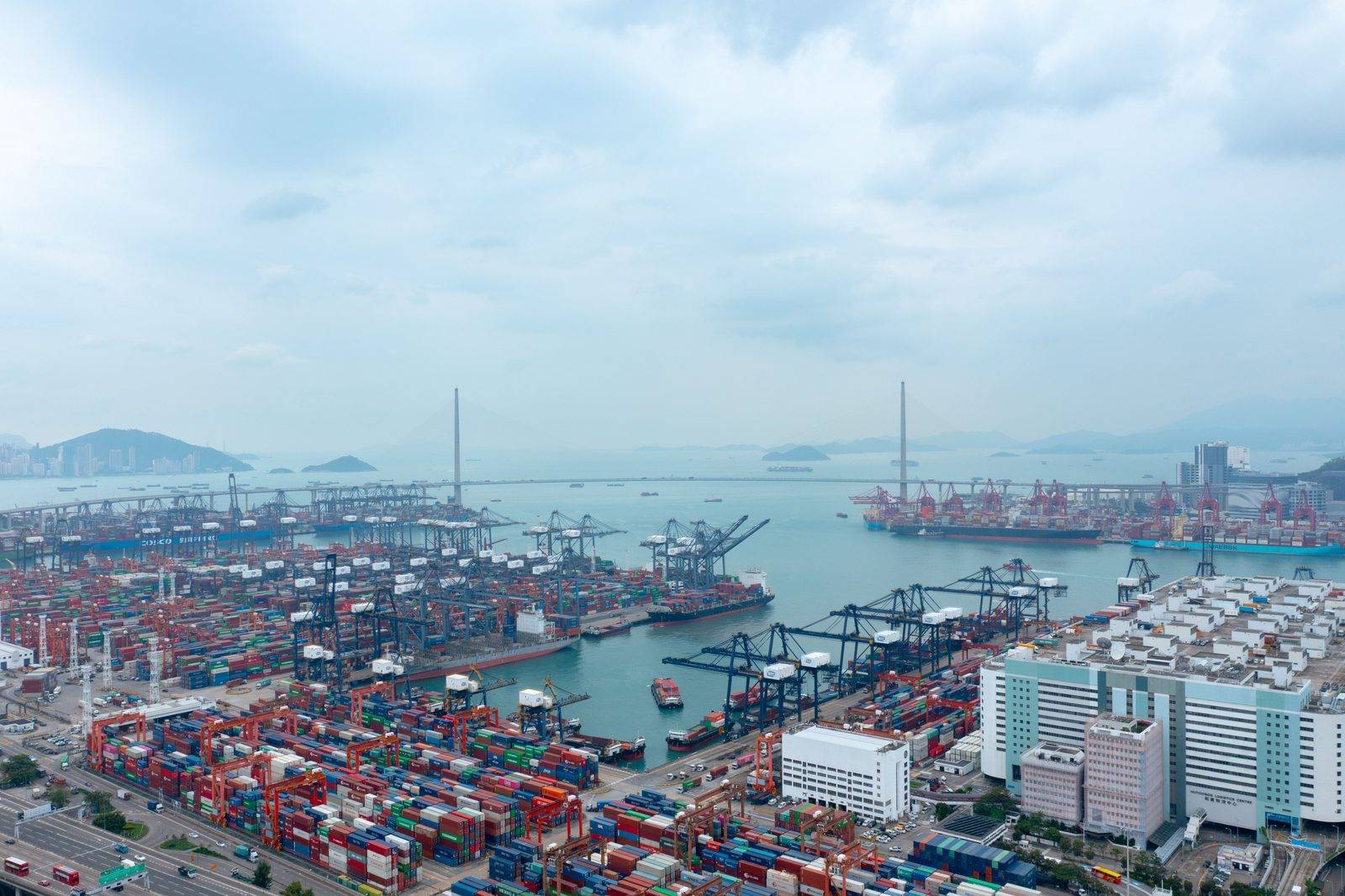
Taiwan and Hong Kong demonstrate significant relative exposure, with AI-enabling goods representing 65 percent and 56 percent of their total exports, respectively.
This starkly contrasts with China's 18 percent and the United States' 13 percent.
The data clearly supports this in terms of trade flows.
Data from the World Trade Organization indicates that the trade in goods that facilitate artificial intelligence experienced a remarkable growth of 31 percent in value in 2025, followed by an impressive 67 percent increase in the first half of 2026.
This surge accounted for 47 percent of the overall growth in global merchandise trade during that timeframe. Asia continues to be the focal point, accounting for 62 percent of the overall trade that facilitates AI development.
This concentration enhances efficiency but also heightens systemic risk: a single entity, TSMC, holds approximately 90 percent of advanced packaging capacity, while the supply of high-bandwidth memory is largely controlled by three suppliers - SK Hynix, Samsung, and Micron.
Crude Oil and the Hormuz Stress Test
Crude oil ranks among the ten most susceptible products, a situation that highlights not the limited availability of the resource, but rather the critical geographic points that dictate its transportation.
Shipping through the Strait of Hormuz has seen a dramatic decline of 95 percent due to escalating tensions in the Middle East, as reported by trade publications.
During this crisis, Brent crude prices have surged above $100 per barrel at various points. Nevertheless, the system showcased its ability to adapt effectively.
In the first half of 2026, exports of crude from the Middle East experienced a significant decline of approximately 24 percent, while LNG exports saw an even steeper drop of 47 percent.
However, the overall global decline was mitigated by increased shipments from alternative suppliers, resulting in a total decrease of about 6 percent for crude and merely 1 percent for LNG.
WTO Deputy Director-General Johanna Hill articulated a critical observation in October: “While the system has demonstrated resilience, that does not inherently imply it is strong.”
Supply chains were redirected, external producers filled the gap, and the global economy adapted accordingly.
However, the adjustment incurred significant expenses - escalated freight rates, extended routes around the Cape of Good Hope, and increased insurance premiums - that disproportionately impact economies reliant on imports with restricted options for modal substitution.
Consumer Electronics: The Visible Edge of Vulnerability
Smartphones and laptops, representing the consumer-facing aspect of electronics susceptibility, have already shown signs of strain.
In the March quarter, global smartphone shipments experienced a decline of 6 percent compared to the previous year, influenced by an AI-driven memory shortage that altered the competitive dynamics, allowing Apple to achieve its inaugural Q1 shipment leadership.
According to Gartner data, global PC shipments increased by 4 percent during the same timeframe.
However, this growth was primarily due to vendors preemptively stocking inventory in anticipation of anticipated memory price increases, rather than indicating robust underlying demand.
The segment of PCs priced under $500 is projected to undergo significant reduction by 2028 due to rising memory costs, as indicated by industry analysis.
These are concrete representations of supply chain processes. These are indicators in the market that have direct implications for consumer well-being.
Electronics production, primarily situated in East Asia and reliant on just-in-time logistics via the Gulf and Red Sea routes, is encountering multiple layers of risk: shortages of components, disruptions in freight, and the accumulation of tariffs.
Section 301 tariffs on electronic components currently enforce effective rates of around 40 percent on specific categories.
Fragmentation Without Decoupling
The dynamics of the political economy related to these vulnerabilities are evolving. US imports from China decreased by 29 percent in the most recent comparable period.
However, economists from the WTO observe that trade between the US and China is displaying indications of a slight reversal and seems to be stabilising.
The narrative surrounding decoupling is more complex than the surface-level statistics imply: trade is being rerouted through intermediary nations instead of vanishing entirely, resulting in new dependencies even as previous ones are dismantled.
McKinsey’s data highlight the imbalance central to the vulnerability map.
China accounts for 31 percent of the products that pose a significant vulnerability to the US economy, whereas the US only provides 8 percent of these products to China.
That imbalance is not inherently a failure of policy - it is a result of decades of comparative advantage and specialisation in manufacturing - but it generates leverage dynamics that decision-makers on both sides now acknowledge.
The World Trade Organization's World Trade Report 2026, published in September, cautioned that the trading system is experiencing its “most severe period of disruption in 80 years.”
However, it also highlighted that 72 percent of global merchandise trade continues to function under most-favoured-nation tariff terms. The multilateral framework persists, yet its boundaries are tightening.
Outlook: Resilience Is Not Robustness
The WTO’s October forecast revision presents a narrative of dual economic landscapes. Merchandise trade growth for 2026 has been upgraded to 3.9 percent from the March baseline of 1.9 percent, propelled by advancements in AI investment and adjustments in supply chains.
Growth in services trade has been revised down to 3.3 percent from the previous estimate of 4.8 percent, primarily due to the significant impact of disruptions in the Middle East on transport and travel sectors.
This divergence - goods showing resilience while services face strain - provides a deceptive sense of reassurance. The resilience of goods is driven by a limited range of AI-enabling products, with supply chains that are among the most concentrated and strategically contested globally.
The ten products highlighted by McKinsey represent 35 percent of exposed import value, not due to widespread trade fragility, but because it is particularly vulnerable in the areas that are most significant.
Addressing these vulnerabilities does not necessitate a withdrawal from commerce. It necessitates clarity.
As Atradius’s senior economist Theo Smid advised, it is essential for traders to “map exposure across tiers of the supply chain, not just direct counterparties” and to “factor in political and export control risk explicitly.”
The McKinsey research suggests a comparable conclusion: pinpointing the vulnerability is essential for safeguarding it, whether by means of diversification, stockpiling, friend-shoring, or the often overlooked task of incorporating redundancy into systems that prioritise efficiency above all else.
The global trading system has withstood the Hormuz shock, the memory shortage, and the tariff escalations without faltering. That is a significant accomplishment.
However, the resilience gained from adapting under pressure differs fundamentally from the robustness achieved through intentional design.
The distinction will dictate if the subsequent shock is mitigated or intensified.
Rahul Karunakar
Editor-in-Chief
Rahul Karunakar is Editor-in-Chief of SKAAH Media, with 25+ years of experience in business journalism across Reuters, NDTV, and WION. An expert in macroeconomics, financial markets, and monetary policy, he leads editorial teams delivering trusted news across TV, web, and social platforms to mass audiences and institutional clients alike.
Comments
Comments are not open on this story. Join the conversation by sharing it, or write to our editors.