The Regime Change Gamble – Why India’s 7% Growth is Too Precious To Waste
The story is appealing. There were protests in the streets, changes in the government, and the hope of a new day. But the economic fallout is terrible when ballot boxes are skipped in favor of barricades.
By Rahul Karunakar, Editor-in-Chief
· 5 min read
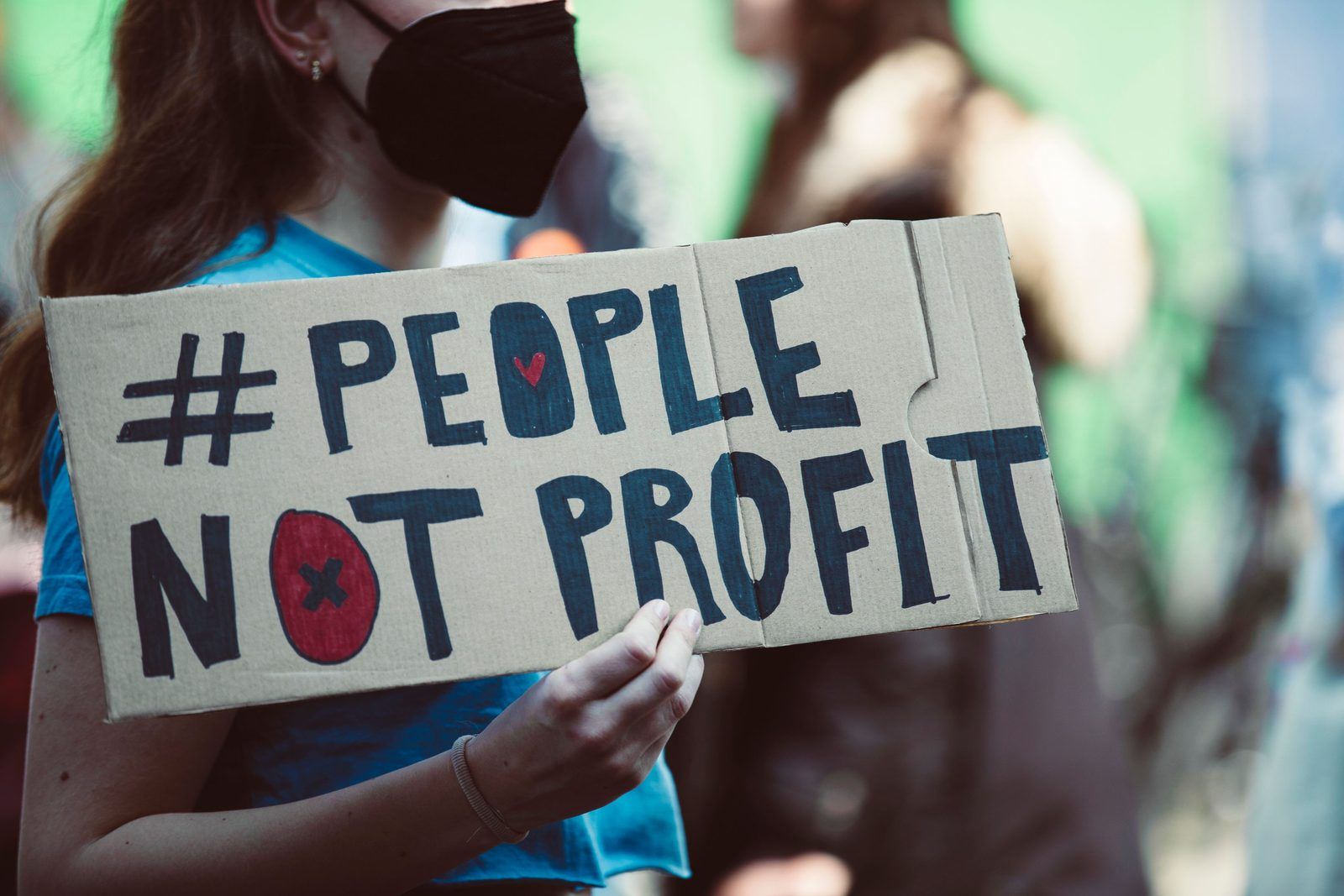
The story is appealing. There were protests in the streets, changes in the government, and the hope of a new day. But the economic fallout is terrible when ballot boxes are skipped in favor of barricades.
A fresh study that looks at six countries, from Tunisia to Bangladesh, shows that government change is a political project but doesn't lead to better economies.
India is at a crossroads of global instability. The IMF predicts a shocking 7% growth for 2026–27. This makes us ask a tough question: Can the world's fastest-growing major economy handle the chaos of a political reset?
The Myth Of the Automatic Dividend
The data makes things clear. In all six case studies, which covered the time between the financial crisis of 2008 and the end of COVID, political changes always caused an immediate, measurable drop in the economy. The pattern is not a coincidence; it is built into the system.
Look at Sri Lanka. In the year after the uprising that got rid of Rajapaksa in 2022, GDP growth dropped to -7.5%. The island nation has since clawed its way back to where it was before the crisis, but the recovery has been uneven and painful. According to the World Bank, growth will slow to 4.2% in 2027 as the effects of the recovery from the crisis wear off. The first shock wasn't just a blip; it caused a systemic break.
In the same way, look at Bangladesh. When people rose up in 2024 to end Sheik Hasina's long rule, the economy did not take off like a rocket.
Instead, GDP growth slowed down to 3.7% in FY25. This was because of slow investment and production delays during the popular uprising.
The IMF's most recent report predicts a slow recovery that will reach 4.7% in FY26, but it also warns of "mounting macro-financial challenges," low tax revenue, and weakening banks.
The constant changes in politics cost the economy as a whole a lot.
The India Anomaly – Sprinting While Others Stumble
India is in a unique situation in a world where economies are slowing down because of transitions.
The October 2026 World Economic Outlook from the International Monetary Fund shows that the economy is on fire. Growth around the world is expected to slow to 3.1% in 2026, but growth in India is expected to be 7.0% in both 2026 and 2027.
This isn't just a strange stat.
It's powered by a domestic engine that is built to last. In contrast to transition economies that depend on foreign demand or exports of a single good, India's growth is based on strong household spending (up 7.1% in the April-June quarter) and a huge push to build up its infrastructure.
The amount of money invested in productive assets, called gross fixed capital formation, rose by 11.9%.
Since 2014–15, the government's capital spending has almost six times grown to about 12 lakh crore. This has created a shock cushion that makes it harder for the economy to go off track.
The Cost Of Churn – Nepal and the Neighbourhood
The cost of political instability is not just an idea; it can be seen in India's immediate neighborhood.
Nepal's growth was slowed down by the major unrest that happened in September 2025. Due to lower business confidence and slower private investment choices, the IMF lowered Nepal's FY2025/26 growth to 3%, which is much lower than its potential.
The Asian Development Bank thinks that growth will slow even more, reaching 2.7% in FY2026, because of the unpredictability of politics.
People are hoping that a smooth change of power will boost trust, but the damage to the investment cycle has already been done.
India can see what they need to do.
Instead of just being a political event, a regime change in New Delhi would also be a big shock to the economy.
The path of 7% growth is not set in stone; it is the result of stable policies, investments in infrastructure, and a regulatory environment that lets private capital commit to long-term projects.
A new round of investments is being made in data centers and computing power because of the AI boom. This needs stability, which is lost when there is a lot of political change.
The Global Split – AI vs Energy Shocks
The new report from the IMF talks about how the world economy is "neither simply slowing nor accelerating but having growth reallocated."
Those who have strong ties to the AI hardware supply chain and limited energy vulnerability do the best.
India has been able to get on the right side of this split, even though it imports a lot of oil. It has done this by focusing on its domestic market and exporting services.
The study does warn, though, that growth around the world is becoming more concentrated.
Out of the 54 economies that made up the world in April, only 32 now make up 95% of its growth. India is one of those 32.
If politics get in the way of India staying on this narrow path, it would not only be a national crisis, but it would also take away a key part of the world economy's ability to bounce back from bad times.
It's not possible for policymakers to make mistakes in the Middle East, where oil prices are expected to average $95.74 a barrel in 2026.
Stability As Strategy
For 1.5 billion Indians, the question is not whether governmental change is good, but whether it can be paid for.
From Tunisia to Sri Lanka, the data shows that the costs of transition happen right away, institutions are harmed for a long time, and the promised dividend is often put off or denied.
India's current growth story is fragile not because of its basics, but because it depends on headwinds from around the world and needs to keep enforcing its policies.
The IMF's prediction of 7% growth shows that they are happy with the way things are now.
The Indian economy and the global economy that depends on it can't afford to take that chance and risk the kind of chaos that caused Sri Lanka's economy to shrink by 7.5% or Bangladesh's growth to cut in half.
It's clear what the markets are saying.
Stable politics are not a luxury in a world torn apart by war and energy shocks; they are an economic advantage.
India counts lost GDP as a way to measure the cost of churn, not just the number of protests.
In the world we live in now, those percentage points mean the difference between being ahead of the curve and falling behind.
(The views and opinions expressed in this article are those of the author and do not necessarily reflect the official policy or position of SKAAH Media. The content is provided for informational and educational purposes only and should not be construed as financial, investment, legal, or tax advice. Readers should conduct their own research or consult a licensed financial advisor before making any investment decisions.)
Rahul Karunakar
Editor-in-Chief
Rahul Karunakar is Editor-in-Chief of SKAAH Media, with 25+ years of experience in business journalism across Reuters, NDTV, and WION. An expert in macroeconomics, financial markets, and monetary policy, he leads editorial teams delivering trusted news across TV, web, and social platforms to mass audiences and institutional clients alike.
Comments
Comments are not open on this story. Join the conversation by sharing it, or write to our editors.