The Iran War Dividend: How Washington Accidentally Built the Yuan’s Bond Market
The war in Iran isn't just a spark in world politics anymore.
By SKAAH Media Webdesk, Newsroom
· 5 min read
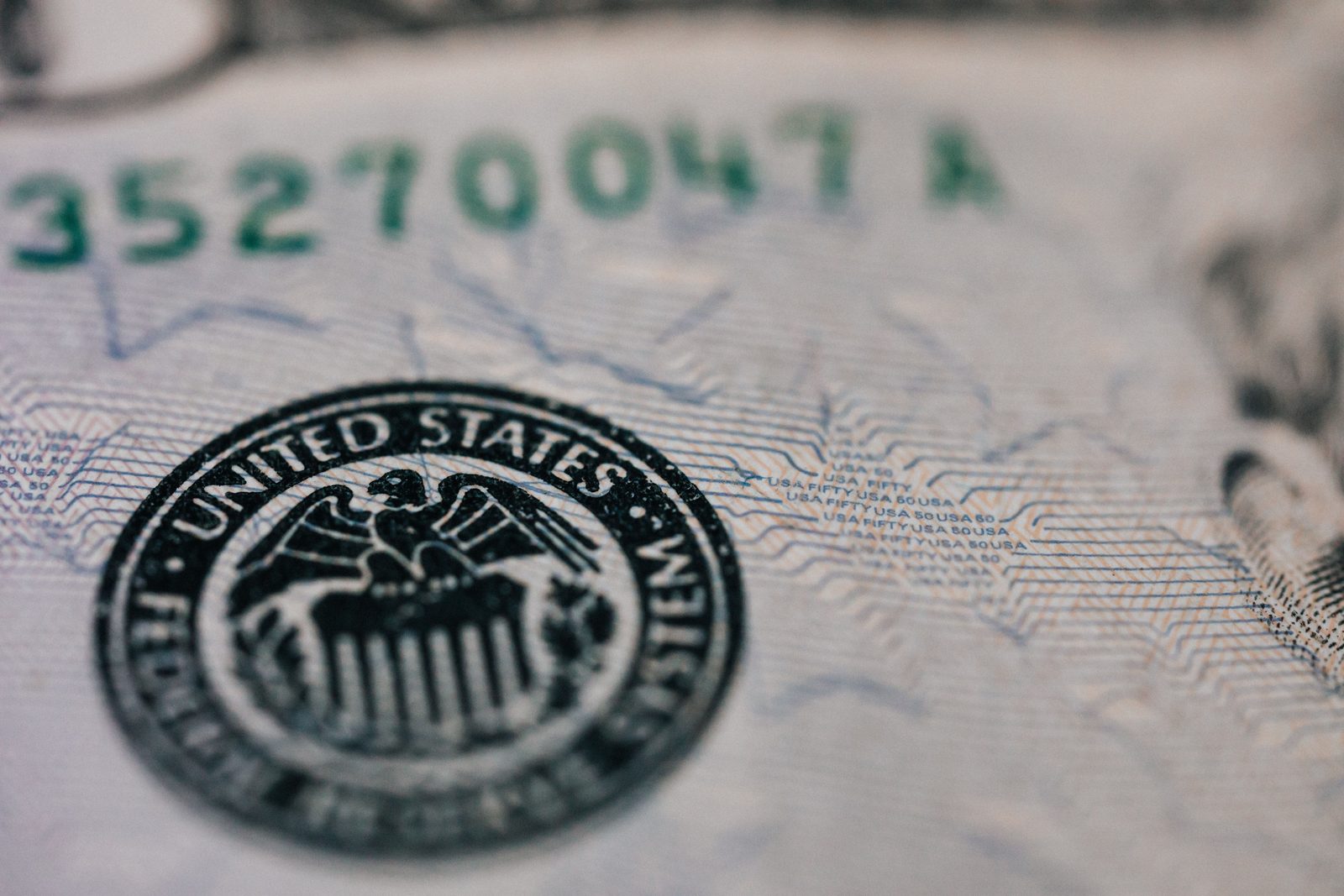
The war in Iran isn't just a spark in world politics anymore.
The biggest change in global banking since the end of Bretton Woods has been sped up by this.
The message is not in the words used at BRICS meetings or by central bankers. It's in the market for bonds. And the numbers show that things are not going the same way, which Washington can't ignore.
The Great Yield Divergence
The yield on a 10-year US Treasury note is close to 4.9% as of early November 2026. In China, the yield on a 10-year government bond has dropped below 1.6%, reaching an all-time low.
That's more than 330 basis points of difference.
To put it simply, the market is willing to pay a huge premium to hold American debt while being willing to accept almost no real return to hold Chinese debt.
This is not a normal way to price risk. This is a move to a different kind of safety, one that is based on the yuan more and more.
Most people thought that if there was a global conflict in the Persian Gulf, money would flow into the dollar, as it was seen as the safest place to store its value.
That playbook doesn't work.
Inflation has gone up in the developed world because of the war with Iran. This means that the Federal Reserve and other central banks have to keep rates high or risk losing control of prices.
Every year, governments in the rich world pay more than $3.3 trillion just to service their debts. This is more than all of the world's defence spending put together.
In the West, the bond market is pricing in a spiral of rising prices and government spending.
China, on the other hand, is pricing in deflationary pressure and a tight financial environment. It's less about yield and more about risk for investors around the world.
The Weaponization Blowback
The war with Iran did not start the process of dedollarization speeding up, but it has become its most powerful driver.
An important example was set earlier when Russian reserves were taken.
That law made it clear to all sovereign wealth funds and central banks that are not part of the Western alliance what they should do. Your reserves are not your reserves if they are kept in dollars. They are being held hostage.
The conflict with Iran has now taken that reasoning to the energy supply.
Reports say that Iran has started only letting ships through the Strait of Hormuz when they are paid for their oil in yuan.
It doesn't really matter if this is a formal policy or just a way to stay alive. It was seen by the market.
For more than 50 years, the petrodollar architecture was based on the promise that oil prices and payments would be made in dollars.
However, the war that the US started has broken down this structure. Political experts in Iran are now calling the petrodollar a "unintended casualty" of Washington's campaign.
The Yuan Bond Boom
The effect can be seen in the debt markets.
Since the West took over Russian property, the number of yuan-denominated bonds issued has tripled. This isn't kindness. It has to be done.
Sovereigns and corporations that used to have easy access to dollar funds are now building new ways to get money.
Kazakhstan's Samruk-Kazyna recently sold 3 billion yuan worth of overseas dim sum bonds. The demand was more than three times the size of the issue.
China's Ministry of Finance is selling green bonds in Canada. For the first sale, over 40 billion yuan worth of orders were placed.
These aren't one-off deals. They show the building of a separate infrastructure.
A lot of China's trade with other countries now goes through the Cross-Border Interbank Payment System (CIPS), which doesn't connect to the New York correspondent banking network at all.
It's not still a SWIFT killer, but it doesn't have to be. It only needs to be an option that can be used by countries that are afraid of sanctions.
The war with Iran has made a huge increase in the number of people who want that alternative.
The Limits of Dedollarization
A note needs to be added to this analysis. The dollar isn't going down in value. The dollar's share of world reserves went down to 56.70 percent in the second quarter of 2026, which is a small drop from the first quarter.
The dollar is still used for trade billing, debt financing, and financial plumbing. There are still big fundamental problems with the yuan, like capital controls, a managed exchange rate, and limits on how freely funds can move.
The euro doesn't have a single fiscal backbone. You can't just use one thing instead of the dollar.
However, the story is now moving from "if" to "how fast."
The war has shown a weakness that was only thought to exist in theory before. The United States has shown that it is ready to use the dollar as a weapon. People around the world have seen it.
There isn't a sudden break; instead, there is a slow, planned spread-out. The bond market is the best way to see how people feel about that.
When investors accept 1.6% interest on Chinese debt but demand 4.9% interest on US debt, they are saying something about the long-term health of the US economy.
The Political Signal
The market signal and the political situation go hand in hand.
The war with Iran was sold as proof of how determined the US was. Instead, it has become a sign of how weak the American economy is.
The IMF has warned that rich economies are now the "worst offenders" when it comes to debt, with a "precarious loop" of debt service cutting into other spending and borrowing costs at their highest levels in decades.
The war has sped up this process by raising the cost of energy, making people expect inflation, and stopping central banks from cutting interest rates.
At the same time, China is setting itself up to be the stable anchor. There is no reason for its bond prices to be low; its economy is not doing well; it is not importing inflation and is not at war.
For global capital, being stable costs something. The yuan's share of the world's reserves is still small, but the tools that can be used to make it work are growing.
The war in Iran has not come in place of the dollar. It has only made the other options more appealing and the cost of being dependent on the dollar more clear.
There was already a shift going on, but the war in Iran is speeding it up.
The event began with the taking of Russian stocks. The conflict in the Gulf is making things worse. The board is the bond market. The difference in yields between the US and China is not a one-time thing.
The fact that the world is protecting itself against the dollar system is a structural sign.
Washington can either handle this change or speed it up even more.
The market has already made its choice. And more and more, people are voting in yuan.
Comments
Comments are not open on this story. Join the conversation by sharing it, or write to our editors.