Why France’s Iran Cyber Showdown Changes Europe’s Security Calculus
In the early hours of October 12, France saw something that had never happened before. Hundreds of supermarket refrigerators that were silent, connected, and seemed safe were turned into tools of sabotage.
By Rahul Karunakar, Editor-in-Chief
· 6 min read
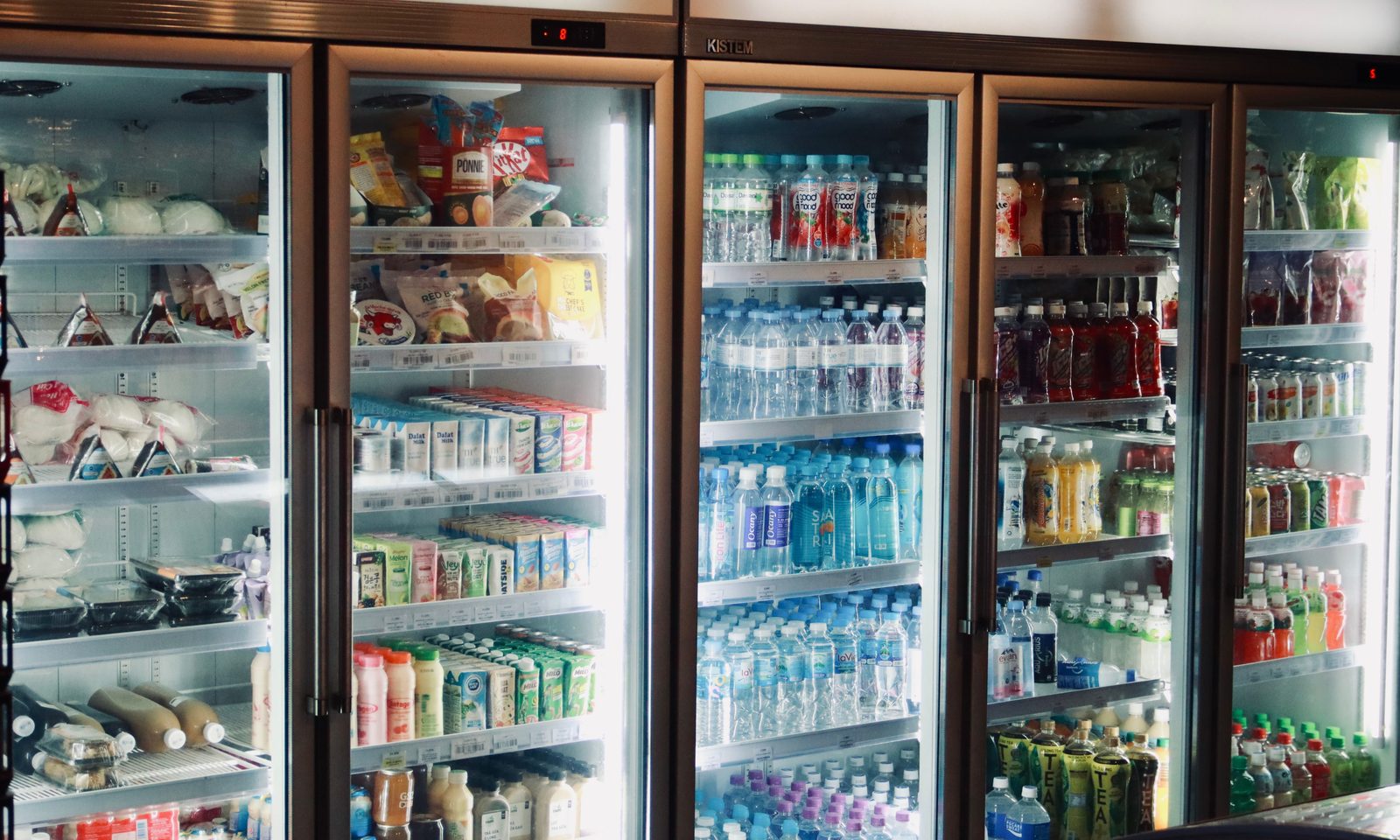
In the early hours of October 12, France saw something that had never happened before. Hundreds of supermarket refrigerators that were silent, connected, and seemed safe were turned into tools of sabotage.
Temperatures were raised to up to 50 degrees Celsius from a distance. Fridges turned into ovens. Food went bad. There were fires.
That person or group was officially blamed by Paris on Monday: the Islamic Revolutionary Guard Corps of Iran. This is a big change in the grey area of European security, and it affects a lot more than just the dairy line.
This is not a story about milk that went bad. This story is about turning everyday things into weapons.
The Attribution: Evidence Over Rhetoric
We need to get past the diplomatic chatter. France has not only made a general accusation.
The Paris Prosecutor's Office has started a formal investigation into a certain unit: Shahid Kaveh, which is an offensive cyber unit connected to the IRGC's Electronic and Cyber Centre.
The technical signs are very bad. Police say that tools written in Persian were used and IP addresses were linked to computers in Iran.
Hackers got into a web interface, started defrost cycles that shouldn't have happened, and, most importantly, turned off the safety alerts that would have warned shop managers.
It was meant to cause as much economic and physical damage as possible.
More than 700 stores were damaged, tens of millions of euros were lost, and at least 20 fires were reported. The Foreign Minister of France called it "the first large-scale cyberattack aimed at sabotage on our national territory."
The Geopolitical Signal: Beyond the Middle East
Why is this taking place now?
This attack is part of a larger, longer-lasting conflict between Israel and Iran that has already led to cyberattacks around the world. But the fact that French civilian equipment was chosen as a target sends a message.
Iran is sending a message that it can hurt Europe's heartland if it is pushed too far in the Middle East. France has called the Iranian ambassador and is asking for sanctions to be put on everyone in the EU who is responsible.
But here's what the market is telling you: this is a test of how strong Europe is.
If the EU doesn't come up with a unified, painful response, it will prove to the IRGC that hybrid warfare against Europe is a cheap option. The reaction "must be very strong," as EU foreign policy chief Kaja Kallas put it.
The question is whether words will lead to actions.
The Hybrid War Context: A Pattern Of Provocation
Do not view this incident in isolation. This fits into a really weird pattern.
Fridges in Belgium, Luxembourg, Sweden, Ireland, and Estonia were hit by a second wave of thieves just a few days after those in France.
In the same way, French blood banks were targeted in an attempt to raise storage temperatures to levels that could be dangerous. Also, let's make the link across the Atlantic: In August, refrigerators at a number of US military commissaries stopped working for no clear reason.
The Pentagon is looking into what happened because they think it was a cyberattack. Iran is the main suspect.
This points to a planned effort to see how strong Western supply chains and logistics are.
The Internet of Things (IoT) is the weapon here, not a baseball bat. The weakness is in the thousands of connected devices, like fridges and HVAC systems, that still use old firmware and default passwords. This gives state actors a large, easy-to-hack surface.
The Domestic Political Fallout In France
Currently, President Macron's government is very politically weak.
The attack showed that France's cyber defences were weak in one important area: they weren't protecting private-sector operational technology (OT).
Even though France's ANSSI (cybersecurity agency) is good, the fact that 700 stores were attacked shows that critical civilian infrastructure is still weak.
This is already being used by the political right and the far right as an example of a failure of sovereignty. The government needs to make its reaction clear and tough.
Because of this, international arrest warrants have been requested for the commander of Shahid Kaveh and his assistants. This is a legal move meant to show that you are strong.
But in real life, it doesn't mean much. Brussels is really under political pressure to speed up the sanctions package. If sanctions are eased so that things don't get worse with Iran, Paris will look weak.
The Market and Industry Impact: Insurance and Liability
The money trail is more than just a political story.
Danfoss, a large Danish engineering company, made software that was used in the attack. This brings up a lot of questions about liability.
Who pays for the millions of dollars worth of trashed goods? The store owners? Who made the software? The country of France?
Right now, insurers are rushing to reevaluate cyber-physical risk. We used to have cyber insurance that covered data losses, but now it has to cover damage to property caused by code.
You can expect premiums to go up in the food retail and logistics areas.
This attack will also speed up a painful and expensive upgrade cycle for stores in Europe. It is now known that the "cheap" IoT gadgets that power these cooling systems are a threat to national security.
Making these systems work better or replacing them will cost a lot of money, but the cost of doing nothing has just been shown in public.
The Iranian Calculus: Denial and Deniability
So far, Tehran hasn't said anything, but Iranian media have called the claims "baseless."
This is a strategy used by the IRGC: keep plausible deniability while causing real harm.
The French evidence, on the other hand, like Persian language artefacts and Iranian IPs, is hard to completely ignore. It looks like the strategy's goal is twofold.
First, to stop Europeans from supporting acts taken by the US and Israel. Second, to see how quickly NATO and EU cyber defences can respond and work together.
If Europe doesn't do much, Iran will probably get worse.
The IRGC may shift its focus to less dangerous areas in the Balkans or the Caucasus if Europe reacts strongly. The attack on the fridge is a test. Next on the list could be a water treatment plant or a power grid.
Looking Ahead: The Normalization Of Sabotage
The most important thing to learn from the French fridge hack is that mischief has become normalised.
It is becoming easier and easier to do bad things that hurt people and the economy in modern society. One simple zero-day vulnerability is all a state player needs to do damage now; all they need is the default password to a refrigerator.
By calling them the IRGC, France has set a red line.
Now the West has to deal with a tough question: how do you fight back against a cyberattack that doesn't kill anyone but destroys jobs and makes fires more likely?
It's not enough to just punish people. It needs to involve a complete rethinking of how key infrastructure is defined.
A supermarket fridge network that can be used as a weapon is no longer just an asset for the business itself. It makes the country more vulnerable.
The G7 foreign ministers are meeting in Paris. They are no longer talking about the peace process in the Middle East.
Instead, they are talking about how to keep Europe's food supply safe. That's a huge change.
The IRGC has shown that it can reach into a suburb of Paris and turn off the heat.
Next time, it might not be food that goes bad, but the power grid. Europe's computer defences are running out of time.
This isn't a practice. This is how war looks now, and it's scary.
Rahul Karunakar
Editor-in-Chief
Rahul Karunakar is Editor-in-Chief of SKAAH Media, with 25+ years of experience in business journalism across Reuters, NDTV, and WION. An expert in macroeconomics, financial markets, and monetary policy, he leads editorial teams delivering trusted news across TV, web, and social platforms to mass audiences and institutional clients alike.
Comments
Comments are not open on this story. Join the conversation by sharing it, or write to our editors.